There is no single personality that guarantees success in sales, but strong routines can make a big difference. The best people tend to show consistency, stay curious about buyers, and put relationships first, not quick wins. They also use social media to research prospects and keep their sales funnel moving, even when the day gets tough.
These traits show up in the daily activities of a salesperson in practical ways. Top performers ask clear questions, listen closely, and learn what matters to each contact so they can offer real help. They accept responsibility for results, stay calm and constructive in conversations, and build trust by doing what they say.
They build good habits to ensure that this selling style remains consistent. Many successful reps exercise on a daily basis, eat breakfast, and start work early to avoid distractions. A typical day in the life of a sales rep will also include quick follow-up messages, time with customers via various channels, and a simple lunch with colleagues to stay connected. Regular coaching, both giving and receiving it, allows them to continue improving.
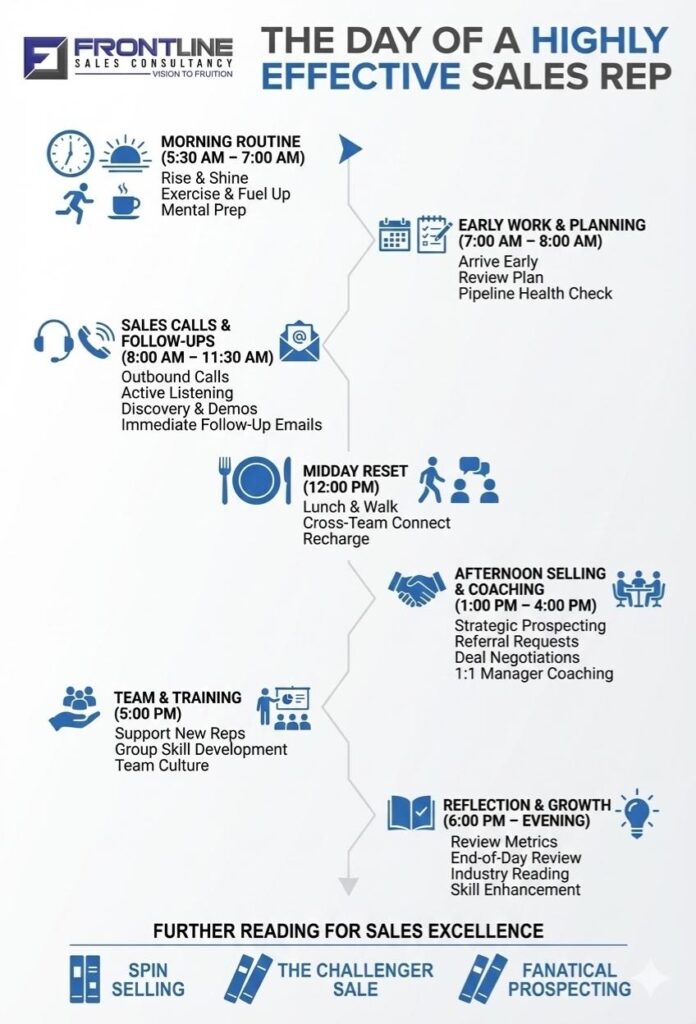
A Day in the life of a salesperson
5:30 AM
A successful salesperson begins early, getting up around 5:30 a.m. and moving their body. Many high achievers make exercise a daily habit because it keeps them focused and prepared for calls. They also eat a proper breakfast, so their energy levels remain consistent throughout the morning.
7:00 AM
By 7:00 am, they aim to arrive at work before the day gets noisy and full of messages. Getting in early often creates a good impression, and it gives them quiet time to think. They review every appointment and write a simple plan for each conversation, including what they need to learn and what outcome they want.
8:00 AM
At 8:00 a.m., they make their first call and begin the day with simple questions. They listen carefully, speak less than the prospect, and focus on what is said rather than what their own assumptions. Before the call ends, they agree on the next steps and schedule a follow-up call to keep the process moving.
9:00 AM
They send a follow-up email while the call is still fresh in their minds. It covers what was agreed, the key problems the prospect mentioned, and the next steps, with a calendar invite so the meeting is locked in. Then they take a few minutes to look up the next person they will call and jot down what they need to achieve.
10:00 AM
Now it is time for a product demonstration. They keep it simple and relevant, and they only show what matches the prospect’s needs. They pause to check what the prospect thinks, rather than talking through the whole presentation at speed.
11:00 AM
They send a quick follow-up email while everything is still fresh. They remind the prospect of what was discussed, apply it to the problems they want to solve, and confirm the next steps both sides agreed on. If they require additional information, such as purchase timelines or key decision makers, they request it in a clear and polite manner.
11:30 AM
They review their monthly sales forecast and approach each opportunity with a fresh perspective. If a deal appears to be closing sooner, later, or not at all, the stage is updated to reflect the current situation. When something important changes, they notify their manager so that everyone is on the same page.
12:00 PM
They take a short lunch break with coworkers, usually around 30 minutes, to recharge before the afternoon. It is also an opportunity to speak with marketing and product managers and learn about what is going on throughout the company. If time allows, they take a quick walk to clear their minds.
1:00 PM
They switch to strategic prospecting after lunch. When it feels right, they call existing customers to check in, offer assistance, and request referrals. They also check back on deals that went quiet or didn’t close to see if priorities have shifted and it’s worth reconnecting.
2:00 PM
This is often a call with a prospect who is close to saying yes. They confirm the decision process, resolve any remaining objections, and finalise commercial terms if negotiation is required. Before they hang up, they confirm the next steps and set a clear deadline, so the deal can be finished by the end of the next day.
3:00 PM
They meet with their manager one-on-one to receive coaching. The emphasis is typically on product demonstrations, such as how to explain value in simple terms and respond to difficult questions. Even if their results are already good, regular coaching allows them to continue improving.
4:00 PM
They set aside time to help newer reps who have questions. It could be about how to conduct a call, send a follow-up email, or deal with a common objection. This type of support strengthens a team and makes the workplace feel more connected.
5:00 PM
They join a group training session with the sales team. It’s a working session where the team breaks down real deals, practises the hardest parts of the pitch, and leaves with a few lines and tactics to use immediately. It also keeps everyone aligned on the team’s sales approach.
6:00 PM
Before they leave, they reflect on the day. They review their sales metrics, see what has progressed, and make a note of what needs to be followed up on tomorrow. Then they finish work with a clear plan in mind, rather than leaving loose ends until the evening.
8:00 PM
In the evening, they eat dinner and properly turn off their phones and emails. Many people also spend a short amount of time reading a sales book to continue learning. It is a simple habit, but it keeps them confident and prepared for the next day.
Qualities of Effective Sales People
They deeply understand who their ideal customers are.
Effective salespeople do not try to sell to everyone. They get really clear on who their ideal customers are, and they learn what those people deal with day to day. That includes the customer’s role, their industry, the problems they are trying to solve, and what a good result looks like for them.
Before reaching out, they conduct some research on the individual and the company, frequently using social media and industry sources. Instead of rushing into a pitch, they ask direct questions and listen attentively during the call. This makes the conversation more personal and allows them to offer something suitable.

They clearly communicate the true value of what they sell.
Effective salespeople can explain the true value of what they sell without resorting to buzzwords. They are intimately familiar with the product, including what it excels at, where it falls short, and what updates are on the way. Because they understand the customer’s needs, they can connect each feature to a relevant practical benefit.
They also understand how their offer compares to alternatives, which allows them to explain why it should be prioritised. They keep the presentation focused and regularly pause to confirm the prospect is following.
They stay aware of their competitors and market positioning.
Strong salespeople keep an eye on the market, because buyers always compare options. They know who the main competitors are, what those competitors do well, and where the differences are clear. This helps them explain, in plain terms, why their solution fits a customer’s needs.
They are also up to date on industry news, trends, and common changes in buyer expectations. Social media, trusted publications, and customer conversations all help them identify what is changing. With this knowledge, they can position their product with confidence and avoid sounding out of date.


They keep themselves informed about industry trends and changes.
Successful salespeople make it a habit to stay current with changes in their industry. They follow trusted publications, listen to experienced practitioners and analysts, and use social media to identify new topics and frequently asked customer questions. This keeps their conversations current and makes them appear credible on calls.
They also monitor changes in buyer expectations because needs can change quickly. When they notice a trend, they adjust their message and product presentation to reflect what customers are currently interested in.
They actively seek mentorship, training, and feedback.
Top salespeople do not try to figure everything out on their own. They ask for coaching and feedback (even when it is tough to hear) because it helps them get better faster. They might review a recent call, practise their product presentation, or ask their manager what to improve next.
They also learn from their teammates and share valuable advice with newer reps. Regular training gives them confidence in the sales process and customer interactions.

They make smart use of sales tools and CRM systems.
Good salespeople use tools to stay on top of details like follow-ups, deal stages, and customer context. Their CRM keeps notes from calls, tracks deal stages, and reminds them when to follow up, so nothing gets forgotten. They also use simple software like web meetings, lead tools, or call systems to save time and keep their day organised.

They consistently put in the effort and go the extra mile.
Successful salespeople stay consistent, even when they hear no or a deal slows down. They follow up when they say they will, prepare well for important calls, and stay focused on the next step. If a customer requires additional clarification, they take the time to explain it thoroughly, because trust is often built through small actions.
They constantly build and nurture new professional relationships.
Strong salespeople view relationships as long-term, not one-time transactions. They communicate with prospects and customers via phone calls, messages, and value-added check-ins. They also stay connected within the company, as good relationships with marketing and product teams can help them better serve customers.
They research and engage with prospects via social platforms.
They spend a few minutes learning who they are speaking with before reaching out. They use platforms like LinkedIn to learn about a person’s role and background, as well as other social media channels to discover common interests and connections. This allows them to initiate conversations in a natural way rather than sending the same message to everyone.

They stay strong and focused even after rejection.
Top performers do not take rejection personally because it is a normal part of the sales process. They take a moment to reflect on what happened, learn what they can, and continue on to the next call with the same zeal. They stay persistent, ask good questions, and do not give up just because the first answer is no.

They believe in action and execution, not hesitation.
Successful salespeople do not spend their entire day thinking about what to do next. They plan their tasks, begin early, and dive right into the calls and follow-ups that keep deals moving. If something feels difficult, they do it anyway because consistent action is what builds momentum.
They use technology to better serve and support customers.
They use technology to stay organised and respond quickly. Tools like CRM systems, web meetings, and sales apps help them keep conversations clear and make follow-ups more reliable. When used well, these tools give customers a smoother experience and help the salesperson stay focused on real needs.
They ask thoughtful questions to understand real needs.
Great salespeople ask questions that help customers explain their goals and problems in their own words. They listen properly, speak less than the prospect, and avoid guessing. This makes the discussion more useful, and it helps them suggest the right solution with confidence.

They bring full commitment and energy to every workday.
They often start early, keep a simple routine, and save time for calls and follow-ups. Their effort is consistent, which gives customers a trustworthy and reliable impression.

They have complete command over their products or services.
Top sales performers understand their product in depth, not just its headline features. They understand how it performs in real-world situations, what it excels at, and where it may not fit. This enables them to deliver a clear product presentation and explain value in a way that feels practical.
They take ownership of their results and decisions.
Successful salespeople accept responsibility for their results and do not blame others when things go wrong. They review their pipeline and key metrics, then adjust deal stages as circumstances change. When a deal is lost, they learn from it and use that insight on the next call.
They maintain motivation and passion over the long term.
The best salespeople don’t rely on emotion or mood. They build habits that keep them steady, planning their week, sharpening their skills, getting feedback, and asking for coaching when they need it. So when targets feel heavy or results slow down, they don’t panic or lose confidence. They stay consistent.

They genuinely care about helping people succeed.
The best sellers aren’t just trying to close, they’re trying to help. They listen properly, ask thoughtful questions, and take the time to understand what the customer is really aiming for. When someone feels understood and supported, trust comes naturally and so do longer-term relationships.

They look for opportunities where others see obstacles.
A “no” or a problem in a deal doesn’t automatically mean it’s over. Strong salespeople stay curious: Why not? What’s missing? Who else needs to be involved? Is there a better fit? Instead of stopping, they adjust their approach and keep momentum. That mindset helps them keep moving forward when things get messy.
Conclusion
Successful salespeople are not successful by chance. Their results come from daily habits, clear planning, and consistent effort, even when the work feels tough. They use tools to stay organised, follow up on time, and keep deals moving with simple next steps.
Just as important, they keep learning. Regular Sales Training and honest coaching help them sharpen their product presentation, handle objections, and stay current with the market. Over time, this learning builds confidence and makes the routine easier to follow.
If you want to improve your own life as a salesman, start small and stay consistent. Plan tomorrow today, protect time for calls, and focus on real relationships rather than quick transactions. When you repeat the right actions each day, your performance will improve, and your results will follow.